Table Of Content

Under the university, it was used as the Alumni Association headquarters until 1997. It was then wholly given over to the Frank Lloyd Wright Preservation Trust, who turned it into the tourist attraction it is today. In the dining and living rooms, an exhaustive restoration has been underway for several years, culminating in return of the home to its original 1910 appearance. The Frank Lloyd Wright Preservation Trust has put together an outstanding website that outlines all of the work that has gone into the project so far. The animated image below illustrates the changes that dining room has undergone during the course of the restoration. Archival photos have helped with the look and placement of furnishings in the public areas of the home, but very little historical record exists of the bedrooms and other private areas of the home.
Robie House, Unity Temple among 8 Frank Lloyd Wright buildings added to World Heritage list - WLS-TV
Robie House, Unity Temple among 8 Frank Lloyd Wright buildings added to World Heritage list.
Posted: Mon, 08 Jul 2019 07:00:00 GMT [source]
Auldbrass Plantation
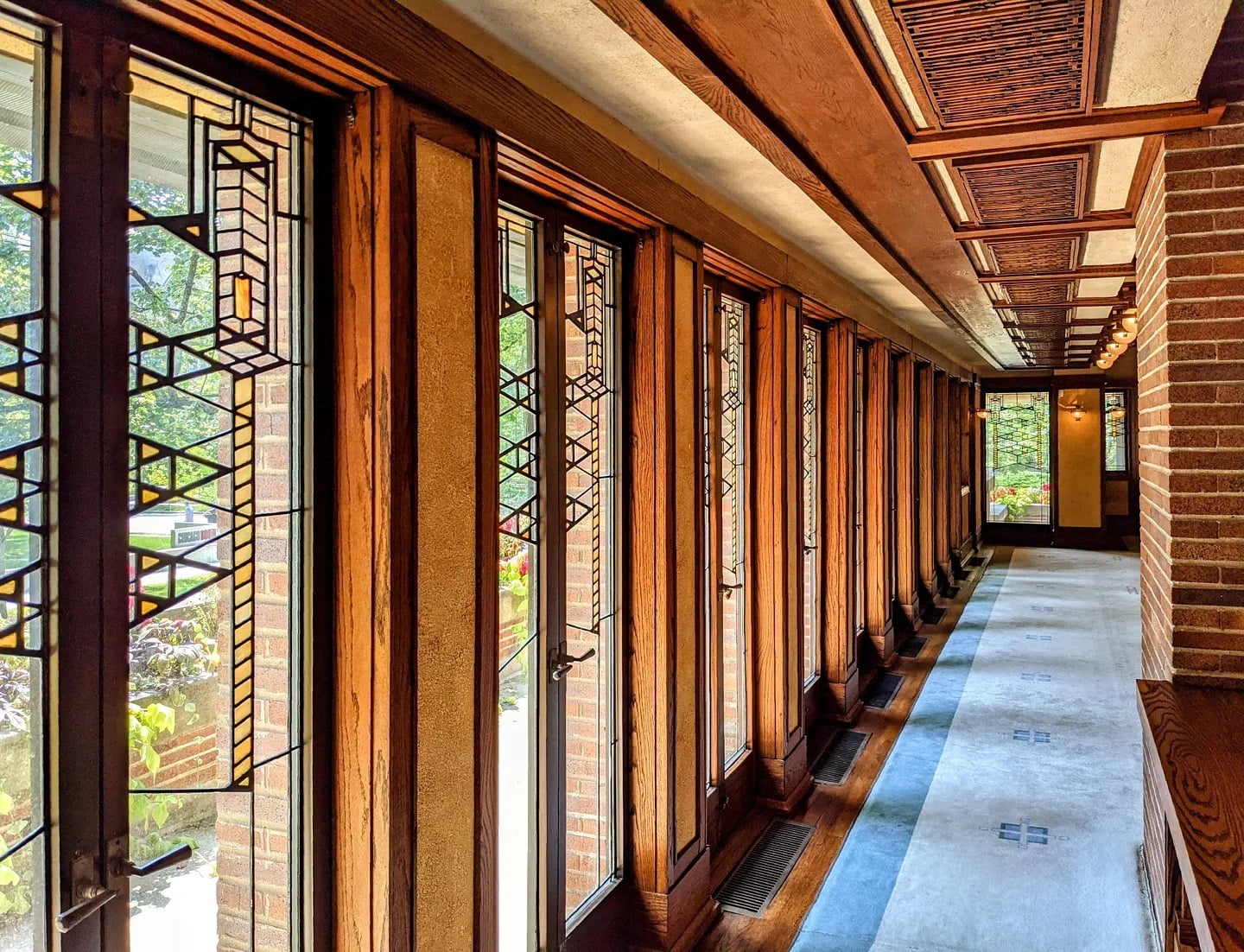
The Robie House’s influence on American architecture was immediate and undeniable. They are organized around a central fireplace and lined with a span of glass doors that let in a huge amount of natural light. Each of these doors has stained glasswork with organic abstract patterns. When the sunlight comes into the building, it casts a beautiful design of shadows and a colored light on the interior floor of the home. Due to financial issues, the Robies sold their house after living in it only for one year. In addition to being a home, it has been used as office space and as a dormitory for students.
THE LAYOUT AND DESIGN OF THE ROBIE HOUSE
It was one of the first homes that embodied an architectural style unique to America. Before the Robie House and other Wright Prairie Homes, architecture in America typically mimicked a foreign architectural aesthetic such as Georgian, Victorian, Tudor, or Queen Anne. Wright and his contemporaries attempted to create quintessentially unique American architecture. The Robie House would become one of the purest expressions of the Prairie Style. The last and best of the houses in Wright’s prairie era, the Robie House, seems designed for a plain, rather than the narrow corner lot where it is located in Hyde Park, a suburb of Chicago.
A Brief History of The Robie House by Frank Lloyd Wright
The Frederick C. Robie House is a renowned architectural masterpiece and a U.S. National Historic Landmark located on the campus of the University of Chicago, Illinois. Designed by the renowned architect Frank Lloyd Wright, the building was constructed between 1909 and 1910 as a single-family home. It is widely considered to be one of the finest examples of the Prairie School architectural style, a movement that is recognized as the first architectural style considered genuinely American.
In addition to the windows, Wright also designed the lighting, rugs, furniture and textiles in the house. The entrance hall, the kitchen, the guest bedroom, bathrooms and staircases are placed in the northeastern side of the house. The house is divided into two main volumes with the chimney rising at the centre of the house.
Although the site has size limitations, I would have liked to see more of a conscious connection to the outdoor space outside of the lower-level playroom. It would have been great to see a thoughtful landscape or hardscape design in this courtyard that was inviting and appealing from the interior spaces. That being said, the home has beautiful details and the main living and dining spaces on the second level create stunning effects with the sunlight. The significance of Wright design of the Robie House is that he neglected the conventional ideation of a house as a box containing smaller “boxes” for rooms. By contrast, the interior space is fluid and transparent, allowing the entry of light without obstructing the view.
A History Of Chicago's Robie House In 1 Minute - The Culture Trip
A History Of Chicago's Robie House In 1 Minute.
Posted: Fri, 21 Oct 2016 07:00:00 GMT [source]
It is a stunning masterpiece of architecture and stands as one of the most recognizable buildings in Europe. The great dome that covers the structure was designed by Filippo Brunelleschi and completed in 1436 – making it one of the oldest domes still standing today. The primary bedroom has a built-in fireplace and an on-suit bathroom, a luxury that was relatively uncommon for the time. Wright preferred something other than attic or basement spaces in his architecture as he thought they were wasted spaces. For this reason, you will typically see them eliminated in his projects. The primary entry to the home was is on Woodlawn Avenue, the short side of the site.
The combination of so much glass and lack of internal structural columns resulted in an airy space that appeared larger than it is, accenting the open plan Wright favored. The chimney mass is constructed of the same brick and limestone as the exterior. The third floor overlaps the major and minor vessels in the center of the building. Two additional bedrooms and a full bathroom are located on the north side of this floor. Dresser drawers are built into the walls of the bedrooms underneath the windows, and project into the eave spaces. A massive fireplace divides the living and dining rooms and connects all three floors, as does a central stairway.
The rooms were determined through a modular grid system which was given order with the 4' window mullions. Wright, however, did not use the standard window in his design, but instead used "light screens" which were composed of pieces of clear and colored glass, usually with representations of nature. Our tours let you explore the city and its architecture in a new way—by land and water.
It was a corner lot, rectangular in shape, about three times as long as it was wide. Robie would set a total budget of $35,000 for the entire project, including the cost of the land, house, and interior furnishings. The Robie house is important because it represents a shift in American architecture and culture.
Instead of stylized forms from nature, a favorite Wright motif, geometric forms predominate. The combination of so much glass and lack of internal structural columns resulted in an airy space that appears larger than it is, accentuating the open plan that Wright favored. The rectangle on the northeast portion of the site, called "the minor vessel," contains the more functional and service-related rooms of the house. On the first floor is the main door and entrance hall (west end) from which a stairway leads to the second floor living and dining rooms. Further east are a coat closet and back stairway, the boiler room, laundry room, and coal storage room, followed by a small workshop, half bath, and a three-car garage.


No comments:
Post a Comment